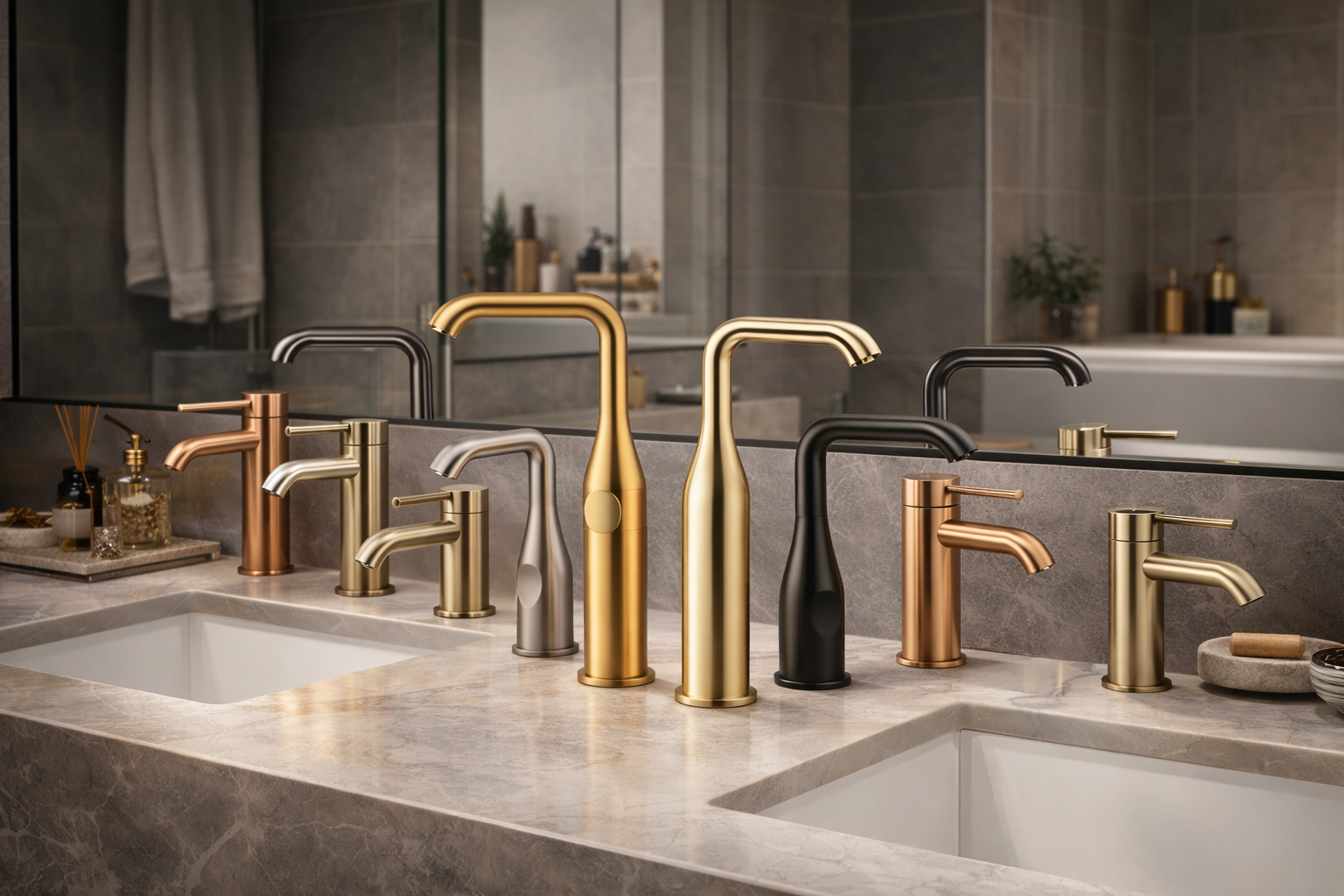
The Best Guide to Faucet Finishes: Gold, Chrome, or Matte Black?
You’ve chosen the shape and the brand. The final decision — the one that will quietly define your daily experience for the next decade — is the finish.
In 2026, faucets are the jewelry of kitchens and bathrooms. But unlike jewelry, they must survive half a million uses, soapy hands, and in India, relentless hard water.
This is a clear, honest guide to the most popular faucet finishes and how they actually perform in real homes.
1. Chrome — The Old Reliable
Mirror-bright and universally familiar, chrome remains the safest choice for most Indian homes.
Pros: Extremely durable, scratch-resistant, affordable, and timeless.
Cons: Shows fingerprints and hard-water spots easily.
Maintenance Score: ⭐⭐⭐⭐
2. Matte Black — The Modern Trendsetter
Soft, non-reflective black with undeniable visual impact.
Pros: Contemporary look, hides fingerprints well.
Cons: Hard-water scale shows up stark white; scratches easily if scrubbed.
Maintenance Score: ⭐⭐
3. Brushed Nickel / Stainless Steel — The Practical Choice
A muted, warm grey with fine brushing that balances elegance and practicality.
Pros: Best at hiding water spots and fingerprints; extremely durable.
Cons: Slightly more expensive than chrome; low shine.
Maintenance Score: ⭐⭐⭐⭐⭐
4. Brushed or French Gold — The Luxury Statement
Soft champagne gold, refined and understated — not the loud gold of the past.
Pros: Adds warmth; modern PVD coatings are highly durable.
Cons: Expensive; matching accessories can be difficult.
Maintenance Score: ⭐⭐⭐
India’s Hard Water Reality
In cities with borewell or saline water, finishes behave very differently.
Avoid matte black and oil-rubbed bronze. White calcium scale and uneven wear become impossible to ignore.
The safest long-term choices are PVD brushed nickel and chrome, where the finish bonds at a molecular level instead of sitting like paint.
Quick Comparison
| Finish | Look | Durability | Hard Water Friendly | Maintenance |
|---|---|---|---|---|
| Chrome | Mirror Silver | High | Good | Medium |
| Matte Black | Soft Black | Medium | Poor | High |
| Brushed Nickel | Warm Grey | Very High | Excellent | Low |
| Brushed Gold | Champagne Gold | High (PVD) | Good | Medium |
Frequently Asked Questions
Which faucet finish is easiest to maintain?
Brushed nickel and stainless steel are the easiest finishes to live with. They hide water spots, fingerprints, and minor scratches better than any other option.
Is matte black a good choice for Indian homes?
Matte black looks stunning but struggles with hard water. White calcium deposits show clearly, making it better suited for low-use bathrooms or soft-water regions.
Does gold finish last long?
Modern brushed gold faucets use PVD coatings, which are extremely durable and resist peeling or fading when maintained properly.
Which faucet finish is best for hard water?
Chrome and PVD brushed nickel perform best in hard-water conditions common across Indian cities.
Faucet vs. Mixer Taps: FAQs
What is the main difference between a faucet and a mixer tap?
A faucet typically supplies either hot or cold water through a single line, while a mixer tap combines hot and cold water internally to deliver water at a controlled temperature through one outlet.
Which is better: a faucet or a mixer tap?
Mixer taps are generally better for modern homes as they offer precise temperature control, improved comfort, and a cleaner look. Faucets are simpler and more economical, making them suitable for basic installations.
Are mixer taps suitable for Indian homes?
Yes, mixer taps are suitable for Indian homes, especially where geysers or centralized hot water systems are used. Proper water pressure and quality internal cartridges are important for smooth performance.
Do mixer taps consume more water than faucets?
No. Mixer taps do not inherently use more water. In fact, by allowing precise temperature control, they often reduce water wastage caused by adjusting hot and cold taps separately.
Are mixer taps harder to maintain than faucets?
Mixer taps have more internal components, which can make repairs slightly more complex. However, high-quality mixer taps with ceramic cartridges are durable and require minimal maintenance.
Which is better for kitchens: faucet or mixer tap?
Mixer taps are usually better for kitchens because they allow quick temperature adjustment and single-hand operation, improving convenience during cooking and cleaning tasks.
Which is better for bathrooms?
Mixer taps are preferred in bathrooms for comfort and safety, as they deliver pre-mixed water at a consistent temperature, reducing the risk of sudden hot or cold surges.
Are faucets more durable than mixer taps?
Faucets have simpler mechanisms and can last long with minimal care. However, well-made mixer taps with ceramic cartridges are equally durable and better suited for frequent daily use.
Do mixer taps work well with low water pressure?
Mixer taps can work with low pressure, but performance depends on design and cartridge quality. Choosing a mixer tap rated for low pressure ensures smooth operation.
Which option is more future-proof?
Mixer taps are more future-proof as they align with modern bathroom and kitchen designs, offer better water control, and integrate easily with contemporary plumbing systems.
Leave a Reply